April 10 - 19, 2026

BFFB 39 | THE FULL PROGRAMME

The programme for the 39th BOLZANO FILM FESTIVAL BOZEN, which will take place from 10 to 19 April 2026, was unveiled today at a press conference.

To mark its 39th edition, the Bolzano Film Festival Bozen (BFFB) presents a selection of significant and creative works from international cinema and invites guests from the film industry to Bolzano. As a multilingual festival in a border region, the BFFB pays particular attention to developments beyond its boundaries, whilst also keeping a close eye on local film production. The programme often focuses on the stories of minorities, whether linguistic, political or social in nature. This year, the festival is also expanding beyond the centre of Bolzano and opening a second venue for film screenings: the Teatro Cristallo in the Europa-Neustift district. This is an important step that engages with the city’s topography and opens up inclusively to the city’s diverse audiences.

The 39th BFFB officially starts on 10 April 2026 with the Italian premiere of the documentary ELON MUSK UNVEILED – The Tesla Experiment by South Tyrolean director Andreas Pichler. The film, which celebrated its world premiere at the International Documentary Film Festival Amsterdam (IDFA), takes as its starting point a fatal accident in Florida involving a Tesla with Autopilot activated, which led a court to find the company partly at fault. Building on this incident, Pichler conducts an investigation based on internal documents, leaked material and statements from former employees, journalists and experts. The film reconstructs the context in which Elon Musk has been presenting the promise of autonomous driving to the public since 2014, whilst simultaneously highlighting the critical aspects of a technology still in development. Footage from dashcams and CCTV cameras documents high-risk situations and accidents, whilst the voices of the protagonists reveal internal dynamics, corporate pressure and safety concerns. The result is a portrait of a complex system in which technological innovation, the shaping of public image and market logic are intertwined.

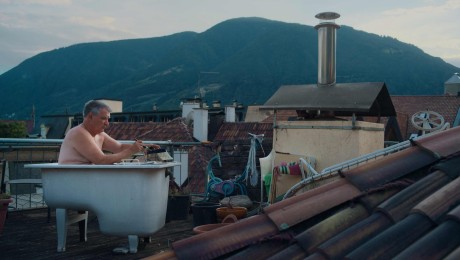
The festival will close with BECAÀRIA (2026) by Erik Bernasconi, which is making its international premiere here. Set in 1977, the film tells the story of Mario, a 16-year-old from Ticino who, after failing his school year, is sent by his father to work as a mountain farmer for the summer. Through his experiences of working in the mountains, meeting new people and his first romantic encounters, the boy comes to terms with himself and the expectations of others.

The film is based on the novel Il becaària (2011) by the Ticino-based writer Giorgio Genetelli. In the local dialect, the term ‘becaària’ refers to someone regarded as a slacker or a city boy who has been sent to the mountains. However, as the story unfolds, this definition is increasingly called into question by the protagonist’s journey.
See more Less
Honorary Lifetime Achievement Awards

In its 39th edition, the Bolzano Film Festival Bozen, in collaboration with the Bolzano Tourist Board, is conferring the Honorary Lifetime Achievement Awards on Ottavia Piccolo and Ulrike Ottinger. The Honorary Awards of the 39th BOLZANO FILM FESTIVAL BOZEN are being presented in collaboration with the Bolzano Tourist Board.

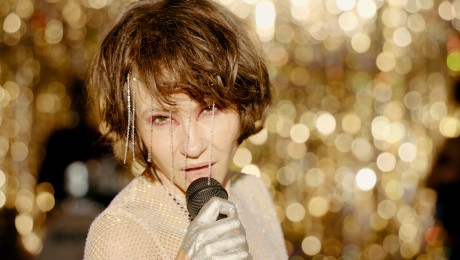
Ottavia Piccolo
“We have the deepest admiration for Ottavia Piccolo. She remains an integral part of the history of Italian and European cinema, television and theatre. Since the start of her career at the age of eleven, she has left a lasting impression on everyone who has seen her perform. It is difficult to list all the directors and writers with whom she has worked over the course of more than sixty years. To name but a few: in theatre, Squarzina, Strehler and Ronconi; in cinema, Visconti, Bolognini and Sautet. On television, she played roles in series based on great literary classics, further boosting her already considerable popularity. In Bolzano, we are presenting a film of particular importance to her career: Metello by Mauro Bolognini, for which she won the Best Actress award at the 1970 Cannes Film Festival. We are also screening 7 minuti by Michele Placido from 2016. Ottavia’s work continues tirelessly, particularly on stage. Equally impressive, however, is her civic engagement and her active presence in the world: she is a critical voice. She comforts us in these often dark and painful years. Thank you, Ottavia!” – Vincenzo Bugno

Ulrike Ottinger
“Ulrike Ottinger never ceases to surprise us. Her artistic career is of inestimable richness and spans the history of the 20th and early 21st centuries. She moved from Germany to Paris, where she spent the formative years between the early and late 1960s. She then moved to West Berlin and continued a career that defies categorisation. As a gallery owner, photographer, set designer, and director of theatre, opera, documentary, hybrid and feature films, she has created an avant-garde Gesamtkunstwerk that can be described as multifacetedly queer across all genres. In her latest film, she offers us an entertaining (and funny) vampire story. Her decades of research are not only original but also rigorous. Her work as a documentary filmmaker takes us far beyond the borders of the West and brings us closer to things that go far beyond our taken-for-granted knowledge. Germany, Berlin, reunification. Certainly. But also – or perhaps above all – Asia. China, Japan, Mongolia. Africa. Ulrike Ottinger, a shaman? “Cinema is an animistic medium for me,” she often says. In Bolzano, we are presenting two films by Ulrike Ottinger: Paris Calligrammes from 2019, which traces the years in France that were fundamental to the director’s training, and Johanna D’Arc of Mongolia (1989).” - Vincenzo Bugno

Competition BFFB39

The Competition BFFB39 is open to feature films, documentaries and hybrid films. It encompasses everything that is understood by filmmaking today: works that refuse to be pigeonholed. The twelve invited films – ten of which are Italian premieres – are productions and co-productions from countries in the Alpine region. The film productions of our time are a mobile universe. They bear witness to the necessity and curiosity to engage with the entire planet, as well as to the equally valid need to explore more familiar territories. Each of these diverse works has a strong, unique artistic profile. Whether they tell the story of a Viennese musician, families in Galicia or Portugal, a residential building in Cairo, Antarctica or other (almost) unknown regions is irrelevant. They will not leave you indifferent.”- Vincenzo Bugno 


RealeNonReale

“The BFFB programme gives ample space to all forms of documentary film. Within the framework of our festival, there are no hierarchies that dictate what can be considered ‘real cinema’. Everything is cinema. The BFFB competition makes room for fiction, documentary and all those formal approaches that ultimately need not – and should not – be defined. With the RealeNonReale section, we aim to highlight even more strongly the diversity of documentary forms, as well as the enormous variety of content, languages and formal identities. Five very different voices, five original works that have particularly impressed us, come from productions and co-productions involving countries in the Alpine region, even though the themes, locations and directors are of very different origins. The selection therefore includes an Austrian production by a Polish director (Magdalena Chmielewska), an intense diary about her relationship with her mother, as well as a Swiss production (by Gregor Brändli) about the colonial past of a country that never had colonies: Switzerland. Three further productions come from Germany: the autobiographical and decolonial work of a Berlin-based Anglo-American director (Cynthia Beatt) on her relationship with the Fiji Islands, featuring Tilda Swinton; the film by a German director of Russian roots (Yulia Lokshina) on the recent wave of emigration to Paraguay, mainly by German-speaking Europeans fleeing a continent that seems unable to guarantee them the freedom they desire, and the autobiographical film by a German-Brazilian director (Daniela Magnani-Hüller), who survived an attempted femicide fourteen years ago.” - Vincenzo Bugno
 

BFFB Special

Five works that have deeply moved us through their narrative structure, their content, their historical context, their emotional intensity and their creative power. 

Cristallo Days

In 2026, the Bolzano Film Festival Bozen (BFFB) will expand its presence across the city and open a new venue at the Teatro Cristallo, where three film screenings will take place.

“The decision to use the Teatro Cristallo is part of the festival’s strategy to incorporate new venues across the city and to conceive of culture in dialogue with Bolzano’s topography. The Teatro Cristallo has been an important cultural institution in the city for decades and a central meeting place for the local community. The fact that the venue also serves as a cinema with more than 400 seats makes it an ideal festival venue,” says Vincenzo Bugno, Artistic Director of the BFFB.

The programme at the Teatro Cristallo begins with three Italian films. The first is La ragazza con la valigia (1961) by Valerio Zurlini, which will be screened on 15 April at 6.00 pm in collaboration with the Museo Nazionale del Cinema in Turin and is dedicated to the actress Claudia Cardinale, who passed away in 2025; the screening will be introduced by Director Carlo Chatrian. This is followed by Un anno di scuola (2025) by Laura Samani, loosely based on the 1929 novella of the same name by Giani Stuparich and set in Trieste in the 2000s, in the presence of screenwriter Elisa Dondi and actors Pietro Giustolisi and Samuel Volturno. On 18 April at 4.30 pm, Gioia mia (2025) by Margherita Spampinato is on the programme, screened as part of the LiLi – Little Lights section, which is dedicated to children, young people and families and features in the weekend programme for the first time.

“We are delighted and proud to welcome the Bolzano Film Festival Bozen to the Teatro Cristallo. For us, this collaboration is both an important recognition and a valuable opportunity to strengthen the dialogue between our theatre and the city, and to open ourselves up to new audiences and forms of expression. The return of cinema to the Cristallo is part of a broader vision of accessibility and participation, in which cultural institutions work together to create shared opportunities for growth and encounter.” explains Gaia Carroli, director of the Teatro Cristallo.

The Teatro Cristallo was established in the Europa-Neustift district of Bolzano, which developed from the 1930s onwards as part of the city’s urban and industrial expansion. It opened in 1954 as a cinema-theatre and temporary venue for the Regina Pacis parish, and over time evolved into an important cultural and social hub. Following its closure in 1973, it was renovated thanks to the commitment of the local community and reopened in 2005, once again becoming an active cultural centre with a programme encompassing theatre, cinema, music and community events.

Hommage – Claudia Cardinale

Claudia Cardinale (1938–2025) was one of Italy’s most prominent actresses and an icon of 1960s European cinema. Best known for Once Upon a Time in the West and 8½, she appeared in over 175 international films and served as a UNESCO Goodwill Ambassador.

The screening of La ragazza con la valigia (1961) by Valerio Zurlini, organised in collaboration with the Museo Nazionale del Cinema in Turin, marks the official opening of the BFFB’s new premises at the Teatro Cristallo and is dedicated to her memory. The film tells the story of the young Aida, who has been abandoned by her lover and finds refuge with his sixteen-year-old brother Lorenzo. A tender, compassionate relationship develops between the two, but it meets with resistance from the family.

“As one of the most beloved actresses of Italian and international cinema, Claudia Cardinale brought to life characters who have enchanted generations of audiences,” emphasises Carlo Chatrian, Director of the Museo Nazionale del Cinema. “The actress, who was equally at home in arthouse and genre films, was an icon of elegance and beauty. Endowed with a powerful stage presence, coupled with the carefree spirit that always distinguished her, the Museo Nazionale del Cinema in Turin wished to commemorate her on the occasion of her recent passing with a selection of photographs by Angelo Frontoni, the ‘photographer of the divas’, who knew how to capture that natural empathy which the actress was able to inspire.“

BFFB Live Score

The trio comprising Marco Colonna, Esmeralda Sella and Francesco Cigana presents an original live musical score for the silent film ’A Santanotte (Italy, 1922) by cinema pioneer Elvira Notari. The project was developed specifically for this occasion: an open, site-specific composition that enters into dialogue with the film’s images and the tradition of the film concert.

Local Heroes

Young talents meet established names, documentary works meet fictional material, classic narrative styles meet experimental forms, short films meet medium-length and feature-length films: the Local Heroes section presents a diverse panorama of cinematic styles from the Euregio (Tyrol, South Tyrol and Trentino) and invites viewers to adopt different and unfamiliar perspectives. The selected films are always close to our hearts and a highlight for audiences at the festival. And: an ideal meeting place to strike up a conversation with local filmmakers.
 

Piccole Lingue DOC

Piccole Lingue DOC, organised in collaboration with the Free University of Bolzano and the La Fournaise association, is the section that the BFFB dedicates to the theme of linguistic minorities; it accepts works of various genres – ranging from documentary forms to fiction and other hybrid forms – of any duration and origin. With Kleinsprachen DOC, we aim to build a bridge between South Tyrolean multilingualism and the numerous contexts in which languages other than those of the majority society are used today. Edited by Silvia Dal Negro, Daniele Ietri, Eleonora Mastropietro and Daniela Veronesi.


Focus Catalonia

Every year, the BFFB dedicates a prominent section to a region that, in some way, resonates with the identity of South Tyrol: border regions or worlds with diverse identities and/or complex histories that are not without conflict. Or simply places where this complex identity serves as a source of great cultural enrichment. This year, we are focusing on a region that embodies all of this: Catalonia. A region with a strong identity, a language spoken by millions of people, a robust economy and a remarkable cultural output. Devoting a section to Catalan cinema means focusing on one of the most dynamic regions in the European film industry in terms of production and international strategies. This year, we also wish to highlight a particular aspect of Catalan cinema: the often hybrid nature of documentary film production, which has flourished thanks in part to the training initiatives of numerous institutions. We present seven works – and various guests – which, in our view, best represent the world of documentary film we wish to highlight (works by Andrés Duque, Virginia García del Pino, José Luis Guerin and Neus Ballús) and further feature films by directors who are even more established internationally (such as Carla Simón) and/or those that are also the result of Catalan institutions’ commitment to filmmakers from other countries (such as Lav Diaz). We will also be joined by Marta Andreu, a Catalan cosmopolitan, shaman and philosopher of documentary film, who will give a performance.

Curated by Vincenzo Bugno with the support of Isona Admetlla Font and Ricardo Apilánez.


This project was made possible thanks to the support of Acción Cultural Española (AC/E) and a contribution from the Spanish Embassy in Italy.

LiLi – Little Lights

LiLi – Little Lights is the section of the Bolzano Film Festival Bozen – BFFB dedicated to films for children and young people. Open to feature films, documentaries and animations, LiLi invites young audiences to immerse themselves in a diverse range of worlds, whilst also offering a welcoming space for adults. We at the Bolzano Film Festival Bozen are convinced that investing in the film education of future generations is of fundamental importance. It is a continuous source of entertainment for young people, fosters the development of critical minds with a keen eye for social and cultural reality, and is one of the most effective ways to build a new audiovisual audience.

At the 39th edition of the BFFB, the LiLi films will be screened for the first time at the weekend. The screenings will take place at both the Capitol cinema and the Teatro Cristallo. There will also be a reduced admission price for all ages.

LiLi - Little Lights is a project in collaboration with the Berlinale GENERATION and the Bolzano Youth Service.


  • Gioia mia (Sweetheart) by Margherita Spampinato (ITA 2025, 93’) 

  • Sciatunostro (Ebb and Flow) by Leandro Picarella (ITA 2025, 87’) 

  • Zirkuskind by Anna Koch, Julia Lemke (DEU 2025, 86’) – Italian premiere

BFFB Extras

Lovesong, a non-existent film in progress 

Performance di Marta Andreu 

"The images begin to appear. They show the attempt at a filmic portrait of a Catalan poet, Lala Blay, that I left unfinished 20 years ago.

She reads her poetry in the family home's garden, reflects, waits, sometimes despairs, laughs, and walks through the forest... We can see different corners of the garden, trees, cats, many cats, mountains, shadows, and ghosts. There are also other images with which the images I once filmed keep an affinity: fragments of films, books and poets, painters, paintings… that are still haunting me. There is also music, there is loss… and even some kind of magic.

While the images follow one after the other, I, sitting by the screen, read my text. A monologue... or is it a dialogue? With the images? With the poetry? With the audience? I share why I wanted to film Lala and speculate why I could not achieve it. What does it mean to make images? What if making images were not anything other than recognising them as a place of affection and belonging? A place that we could call home? And what if this bond were broken? This Lovesong is an attempt to return to the images one once loved and belonged to. It is an essay to regain the lost voice and a reflection on the possibility of creating again. It is a film that can only exist if and when I tell it." - Marta Andreu

BFFB Industry Days

The Bolzano Film Festival Bozen – BFFB, now in its fourth year under the artistic direction of Vincenzo Bugno, is increasingly establishing itself as a think tank offering an ever more diverse range of opportunities for the film industry. This development is closely linked to the collaboration with and between the various institutions that shape South Tyrol as a hub for culture and audiovisual creativity, including the IDM Film & Music Commission, the ZeLIG Film School, the Film Association South Tyrol (FAS) and the HDS South Tyrol Trade and Services Association.

“South Tyrol has a passion for cinema. This is not merely about the interest of an attentive audience, nor about the vitality and professionalism of those who create films here. Here, passion means the growth of the film and audiovisual industry, collaboration at local, national and international levels, as well as economic and political-cultural opportunities. “Undoubtedly, the BFFB sees itself as one of the key players in South Tyrol’s film industry; it is aware of its potential and intends to actively champion its development.” – Vincenzo Bugno

This year’s Industry programme brings together various formats that interlock and collectively paint a vibrant picture of the regional and international film landscape: MASO presents an international training and support programme for short film projects, whilst NEDC specifically supports the development of documentary films in Northern Italy. Scriptum focuses on the work of screenwriters and makes creative processes accessible to the public. The enhanced collaboration with the ZeLIG film school not only brings fresh impetus to the festival’s operations but also strengthens the link between education and practice. The programme is complemented by the Female Speed Meeting as a platform for exchange and visibility, as well as by the Talk on South Tyrol as a Film Location, which reflects on current developments and future prospects within the industry.

International Jury BFFB 39

Andrea Bernard, director and architect from Bolzano, works across opera, theatre, artistic events and museum exhibitions. He collaborates with various theatres and festivals in Italy and across Europe, creating productions that bridge the gap between tradition and innovation. In 2024, he received the Abbiati Prize from Italian music critics for Best Director.

Susanne Burg is Film critic at Deutschlandfunk / Deutschlandfunk Kultur. She presents the weekly film programme Vollbild, which covers new films, major international film festivals and the latest news from the world of cinema. 

Roberto Farneti is Associate Professor of Political Science in the Faculty of Economics and Management at the Free University of Bolzano-Bozen. He was a fellow of the Alexander von Humboldt Foundation at the J.W. Goethe University (Frankfurt am Main). He researches the relationship between society, art and cinema and is the author of the book L’occhio della madre. A cosa serve l’arte contemporanea (Castelvecchi, 2024).

Anna Ladinig is a Austrian curator and cultural practitioner. She studied Slavic Studies at the University of Innsbruck and her doctoral research focuses on Soviet-Central Asian cinema. Since 2019, she has been director of IFFI – Internationales Film Festival Innsbruck. She is also co-director of Film Campus Innsbruck, is active in FÖFF – Forum of Austrian Film Festivals, and represents it on the Austrian Cultural Council.

Frédéric Maire has been working in the film industry since 1979, as a director and journalist for various newspapers and radio stations. In 1992, together with three colleagues, he founded and ran the children’s film club La Lanterna Magica (www.lanterna-magica.org). He has been working with the Locarno Film Festival since 1986. He became its artistic director in 2005. From 2009 to 2025 he headed the Cinémathèque Suisse, and from 2017 to 2023 he served as president of the FIAF (International Federation of Film Archives).